
Springfield Township Previous Residents Sources
Previous residents of one Springfield Township address are best traced in layers. The County Property Records Website supplies the current address and sales reference. The Recorder identifies transfer parties and deed book/page links. Historical maps, telephone books, yearbooks, and census research add date-specific household context. County and state offices offer probate, vital, and archival routes when a family trail reaches an estate or death event. The sources overlap, but each has a different purpose.
| Source | Period it can cover | Holding route | What it can establish |
|---|---|---|---|
| Property record and Sales reference | Current portal record, with sales route described as mid-1970s forward | County Property Records Website | Address, parcel, sale reference, and deed book/page lead. |
| Recorded deed chain | County records begin in 1784 | Recorder account, subscription, counter, mail, or public terminal | Grantor, grantee, record type, book/page, and prior-reference trail. |
| Historical maps and atlases | 1792 through later map eras | Springfield Township Historical Society | Dated road, building, place, and owner labels. |
| Telephone books and yearbooks | Verified examples from 1945 through 2019 | Historical Society archive | Subscriber, school, or former-classmate context after inspection. |
| Released federal census material | Released census years only | Free Library and genealogy repositories | A household on the census date. |
| County Archives or Register of Wills | Varies by event and record type | Archive, probate, and historical-record channels | Older vital listings, estate, probate, and family trail evidence. |
A recent property question usually starts with the address and Sales tab. A much older question may start with a map or an older deed book/page. Household evidence should be placed beside the transfer history, not substituted for it. No verified Springfield Township criss-cross directory run was found, so a street-address listing cannot be assumed to exist for a given year.
Note: A source's date is as important as its name because past residents, owners, and subscribers can be different people.
Springfield Township's Mid-1970s Record Divide
The local house-history method has a clear access divide. The Historical Society describes a remote route for current and post-mid-1970s sales research, while older deed-book images are pursued at the Recorder's Norristown terminals through Image Sync. Montgomery County's recorded land universe begins in 1784. The division is about access, not a gap in the County's land records.
That comparison helps set the next step. A remote index result can reveal a book and page, but remote document images require a Recorder subscription. At the public workstations, researchers can follow older references when the modern chain ends. The older scans may be handwritten. Notes, a legal description, and a clear book/page log become more useful as the address moves further back in time.
Springfield Township Parcel Trail Start
The Montgomery County Property Records Website is the practical starting point for previous residents research when an address is known. County property searching is by street address or parcel number. Owner-name searching was removed in 2022. In the address form, Street is required; Number, Direction, Suffix, Unit, and Municipality are optional. Set Municipality to Springfield Township to avoid a similarly named street elsewhere in the County.
A Springfield Township parcel or tax identifier begins with 52, according to the Historical Society guide. Verify the property, open the Sales information, and write down the deed book/page reference. The map and property card are useful location aids, but they do not certify that every person who lived at the address appears in the ownership record.
The Historical Society property-research guide illustrates this Springfield Township address-to-deed workflow.
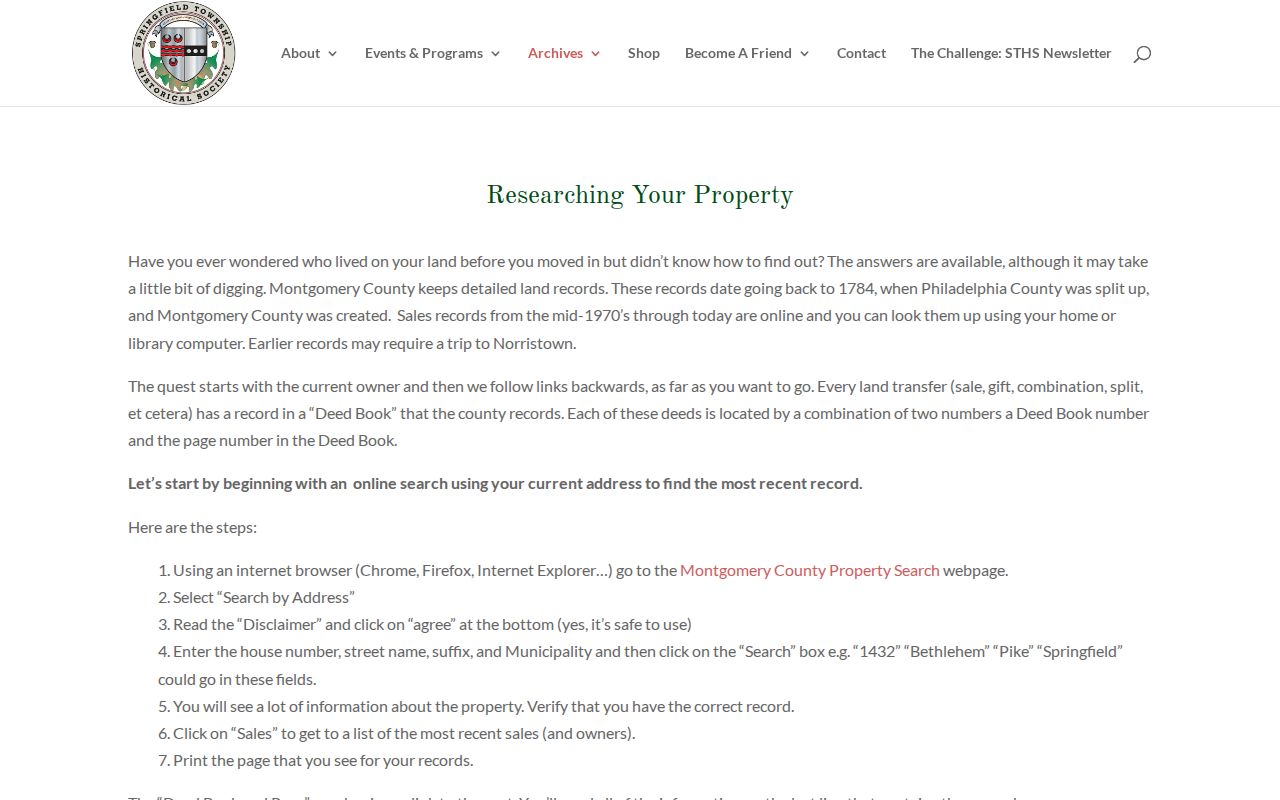
Use the guide's sequence to turn an address into a parcel and book/page lead before moving to the Recorder, rather than treating the property result as a household roster.
Trace Springfield Township Previous Residents Deeds
The deed chain connects past owners, not every past resident. Begin with the current property result and its latest sale reference. At the Recorder, the purchaser is the grantee and the seller is the grantor. The prior owner often appears by searching the seller's earlier purchase. A legal description, which is the formal property description in the recorded document, may remain more stable than a street address over time.
- Find the current Springfield Township address in the County property search and record the parcel ID, Sales reference, and deed book/page.
- Open the Recorder Public Access System, create the required account, and search the address, party name, or parcel identification number.
- Record the instrument's book/page, record type, grantor, grantee, and any reference to an earlier book/page.
- Search the seller as a grantee to locate that person's earlier acquisition, then repeat the same recording process.
- When the modern route ends, use the Recorder's Norristown public terminals and Image Sync path for older deed-book images.
- Grantor
- The party transferring an interest in the recorded property.
- Grantee
- The party receiving that interest in the recorded property.
- Chain of title
- The succession of recorded transfers used to trace interests in one property backward.
- Legal description
- The formal recorded description of land or a lot, often more durable than a changing street label.
The Recorder's public-record search gateway is the account route for name, address, and parcel research.
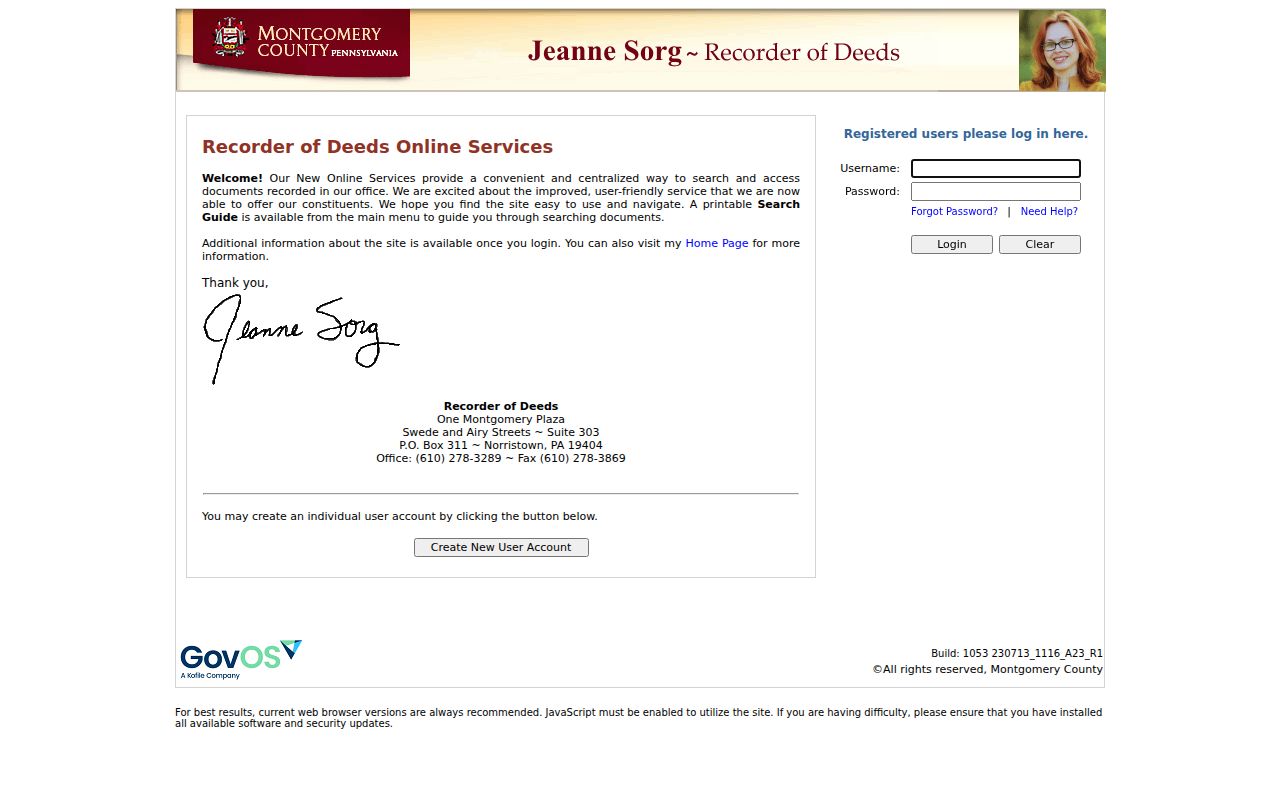
A name in an index needs to stay attached to its book/page and property context, especially when similar names appear in County records.
Springfield Township Recorder Research Options
The Recorder's counter is part of a complete previous residents search. Public search computers are available at the office. The Historical Society directs older property research to the third-floor public workstations, identified in its guide as Room 303, and says early afternoon can be easier for a terminal. Researchers may take notes, but the guide says not to photograph screens. Staff can provide general information by phone, yet the Recorder does not conduct searches for requesters.
Remote document images are subscription-gated. A calendar-day subscription is $25 and a monthly subscription is $300; plain image prints are 50 cents per page. An e-certified copy is $10.50. Counter copies are 50 cents per page, with a $1.50 certified-copy addition. A written mail request needs identifying information, a self-addressed stamped envelope, and the Recorder's published payment terms.
The Recorder copy-options page details the counter, mail, e-certified, and subscription channels.
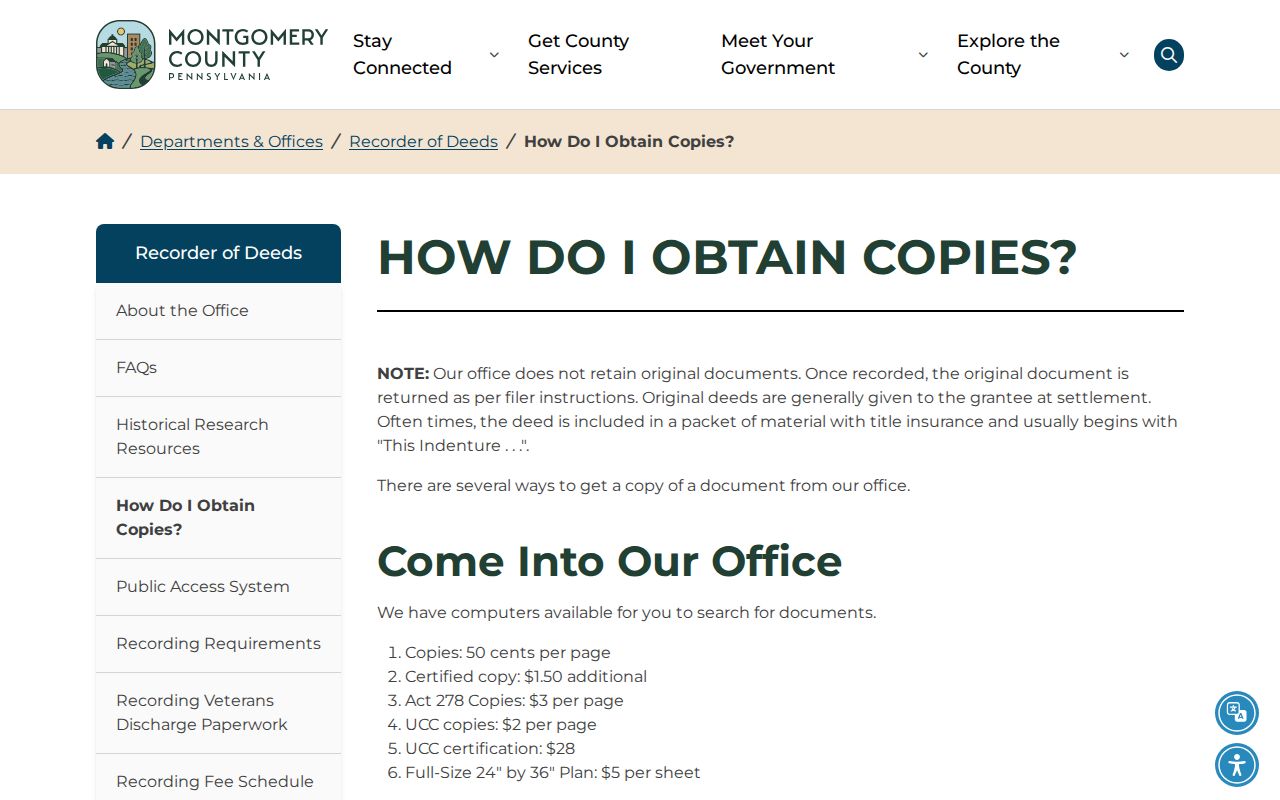
Write down a document reference before buying an image. That focused approach avoids paying for a broad set of records that do not advance the address trail.
Note: A Recorder index may be available remotely, but image access and older-deed research use separate access paths.
Springfield Township Previous Residents Map Checks
Old road names can break an otherwise sound address search. The Historical Society records that Paper Mill Road was labelled as the road toward Willow Grove in 1855, and that Church Road was called Cherry Road in 1860. The same map history includes Flour Town and Flower Town labels, landowner maps, rail-era places, and later atlases. These are useful leads when a current street name returns no older match.
Map evidence must be reconciled with a deed book/page, a lot or plan description, and a second source. The Society warns that historical maps may include planned roads that were never built and deliberate copyright-trap errors. A current parcel number is a modern location tool, not an automatic conversion for an older legal description.
| Road name | Compare the historic label with a current road, deed reference, and map date. |
|---|---|
| Property boundary | Check a legal description or plan rather than relying only on map placement. |
| Owner label | Treat it as an owner clue for the map date, not proof of a full household. |
| Absent address | Test name changes, road changes, and map-era differences before concluding that no record exists. |
Past Springfield Township Households
Deeds show the ownership side of a property history. To learn who lived there before, add dated household sources. The Historical Society has verified telephone-book examples, school yearbooks, maps, and local archival material. The Free Library provides in-building genealogy access, including census research. The research did not verify a conventional local city-directory or criss-cross run, so use actual inspected materials rather than assuming an annual address list exists.
- Put the known sale, map, or telephone-book date in a timeline beside the address.
- Check released federal census material for the nearest available census date and preserve its address context.
- Compare any named subscriber, owner, or student record with the dated deed or map rather than merging names automatically.
- Look for a later or earlier document in the Historical Society archive, the County Archives, or a relevant repository.
- Use probate, obituary, or vital-record channels only when the record type and access rules fit the date and relationship.
Telephone books, yearbooks, and census returns are covered in more detail with their collection limits on the Springfield Township city directory reference. Pairing them with the deed chain preserves the difference between a transaction party and a dated household clue.
When Springfield Township Deeds Stop Short
A deed trail can establish a transfer, not automatic occupancy. A recorded owner may use another mailing address, a property may have renters, and a household may include people who never appear on a deed. Likewise, an owner label on a historic atlas is bounded by that map's date. This is why previous residents research needs at least one household-oriented, independently dated source before drawing a conclusion about who lived there.
Township permits can sometimes add a date-specific property clue, but Springfield Township does not publish a verified general online permit-result search. For a relevant project, make a specific request to Community Development under the Township's non-police Right-to-Know route, naming the address, approximate date, and type of record. Do not ask the Township to create a private resident list.
Close Springfield Township Address Trails
When an address chain points to a death or estate, switch to the proper custodian instead of making a conclusion from an index. The Register of Wills genealogy route identifies probate docket books from 1784-1987 and computer probate records from 1988 forward. It also identifies County birth and death holdings for 1893-1915. The County Archives holds pre-1906 local birth and death registry listings, but cannot certify records.
Pennsylvania vital records are confidential except as authorized. The state genealogy program releases births after 105 years and deaths after 50 years to the Pennsylvania State Archives, subject to its procedures. A certified record has its own eligibility and identification requirements. These channels can close a historical family trail, but they are not shortcuts to a living person's current address.
The County archival-retrieval page shows the archive route for older local records and related research channels.
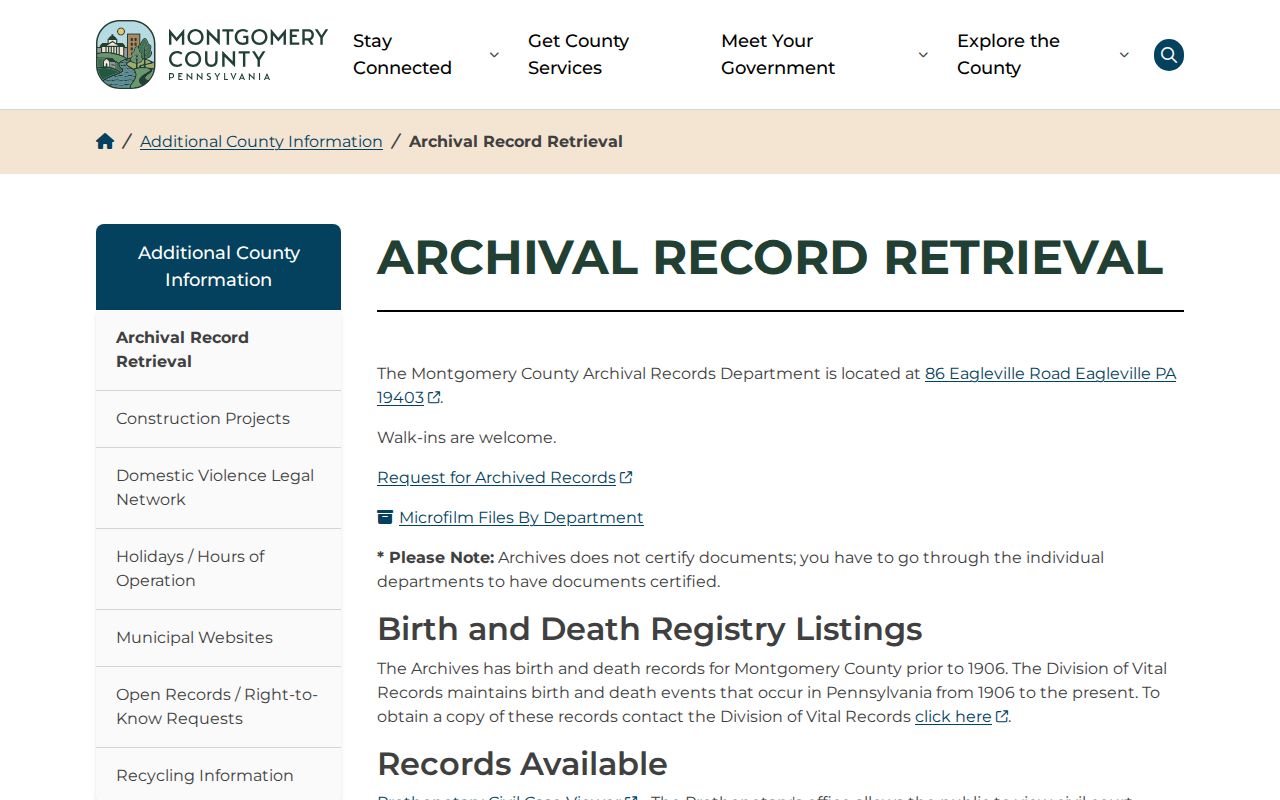
Bring the address, approximate year, names as recorded, and book/page or parcel references to an archive or probate inquiry. Those details help staff locate an identified record without asking them to reconstruct the search.
The Recorder historical-research resources page provides another route to County archives, historical societies, state archives, and related record custodians.
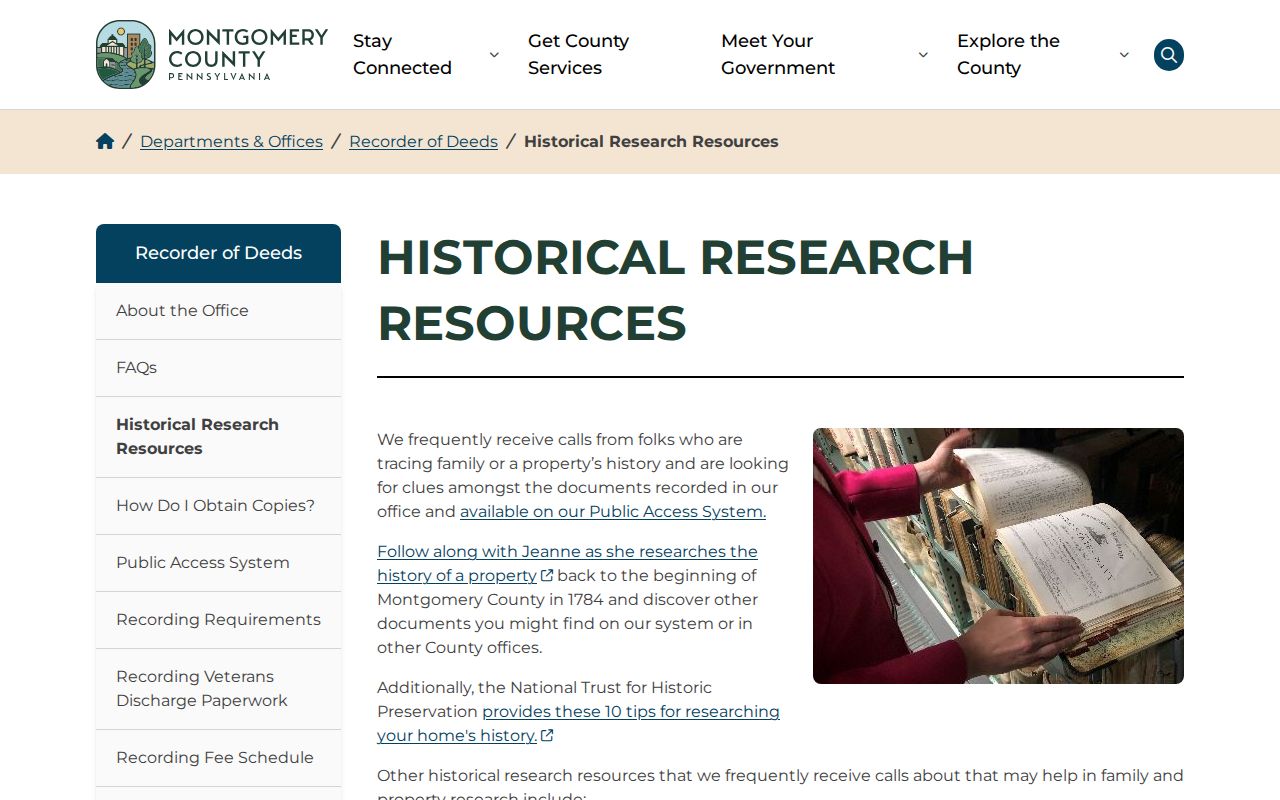
That referral path is useful when an older reference ends at a repository boundary rather than in the online Recorder index.